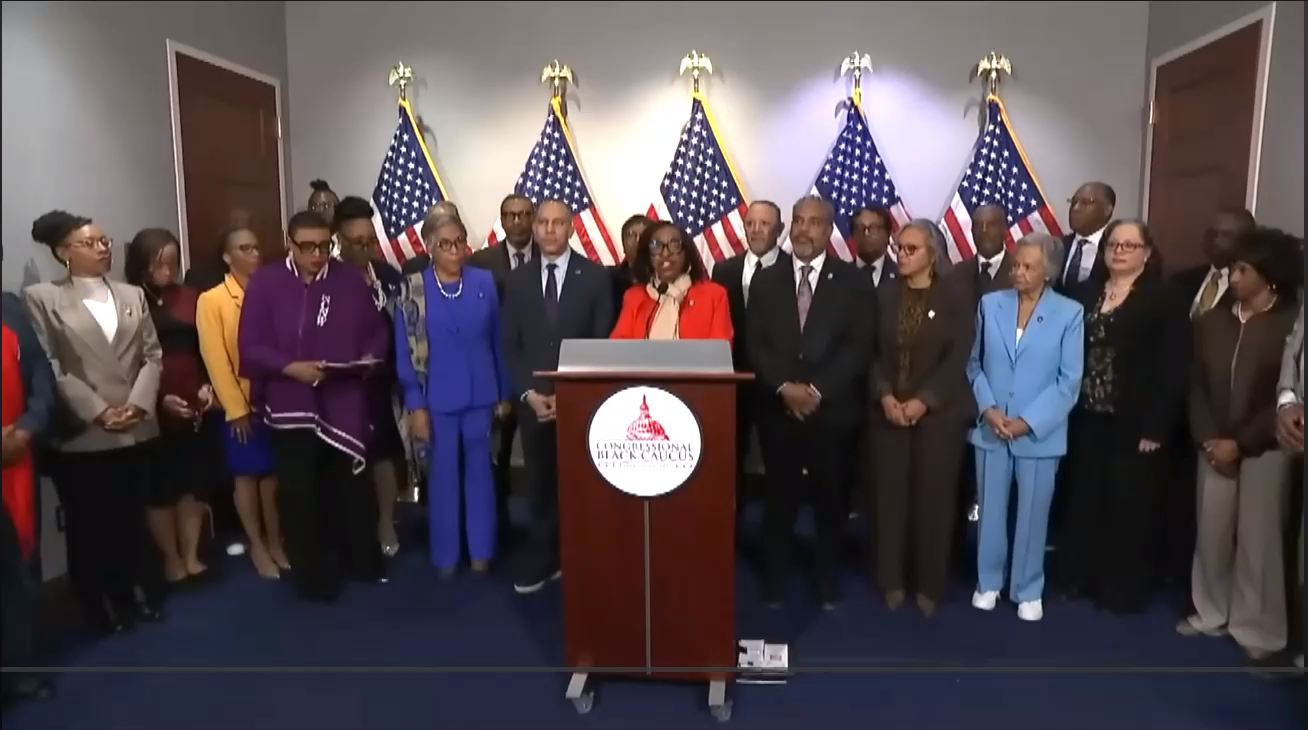
For 37 years, the same sentence has been placed at the top of federal reparation bill H.R. 40.
The same sentence.
The same mistake.
The same outcome: no reparations.
Both the 1989 bill and the 2025 version open by saying slavery happened in the “United States and the 13 American colonies between 1619 and 1865” .
Let’s say it plainly:
That is false.
There was no United States in 1619.
There were no “American colonies” as a sovereign entity.
The land was under British control. Period.
So this is the question that has to be asked:
How does something this basic stay wrong for 37 years?
Not once corrected.
Not once clarified.
Not once fixed by lawyers, scholars, or lawmakers.
That is not a typo.
That is design.
A DELIBERATE MISFRAMING OF RESPONSIBILITY?

In 1619:
- Jamestown was a British colony
- The Crown controlled the land
- The system of slavery began under British authority
The United States:
- Did not declare independence until 1776
- Did not form a federal government until 1789
That is a 170-year gap between the bill’s starting point and the existence of the United States government.
So when the bill says slavery existed in the “United States” starting in 1619, it does something very specific:
It rewrites who is responsible.
Instead of separating:
- British liability (1619–1776)
- U.S. liability (post-1789)
…it blends everything into one vague narrative.
And that has consequences.
Because reparations is not just about telling a story.
It is about making a claim.
And claims require precision.
If you cannot clearly say:
- who caused the harm
- when they caused it
…you cannot force accountability.
That’s not theory. That’s how law works.
Why This Looks Intentional
Let’s stop pretending this is accidental.
For 37 years:
- This bill has gone through legal review
- It has been backed by scholars and policy experts
- It has been reintroduced again and again at the highest levels of government
And yet, the same foundational error remains untouched, uncorrected, and unchanged.
At that point, this is no longer oversight.
This is not something that slipped through the cracks.
This is something that has been allowed to remain.
That leaves only two real explanations:
- Either every legal mind, every academic, and every lawmaker involved failed to catch a basic historical and legal flaw for nearly four decades
- Or the flaw is doing exactly what it was meant to do
And when you look at the results, no enforcement, no payout, no execution, the answer becomes clear.
Because this misframing does three things with precision:
- It acknowledges harm just enough to satisfy public pressure
- It blurs responsibility so no one can be held directly accountable
- It undermines enforceability so nothing ever has to be paid or delivered
That is not a harmless mistake.
That is a structure that absorbs outrage, deflects liability, and prevents real-world consequences.
THE RACE-BASED FRAMEWORK THAT DOOMS THIS BILL BEFORE IT EVER BECOMES LAW

Even if the historical defect were fixed, the modern version of this bill hits a second barrier that is even more destructive.
This is not a technical issue.
This is a fatal legal flaw.
The 2025 version expands the class to a broad racial category:
“African Americans.”
That may sound inclusive. It may sound politically safe.
But in a courtroom, it becomes the bill’s weakest point.
Because under Supreme Court precedent, any race-based policy is immediately subjected to strict scrutiny, the highest level of constitutional review.
That standard is unforgiving.
To survive, the policy must:
- Address a specific, identifiable harm
- Apply to a clearly defined and limited group
- Be narrowly tailored to directly remedy that harm
This bill fails on all three.
It does not define the harmed class with precision.
It does not limit eligibility to descendants of U.S. chattel slavery.
It does not anchor the remedy to a provable, lineage-based injury.
Instead, it expands the category.
And that expansion does real damage:
- It breaks the direct link between harm and remedy
- It sweeps in individuals without a legally traceable claim
- It turns a targeted repair into a broad racial program
At that point, the policy is no longer narrowly tailored.
It becomes constitutionally exposed.
And once exposed, the outcome is predictable.
Courts will not debate intent.
They will not weigh political messaging.
They will apply the standard.
And under that standard, this framework does not bend.
It breaks.
Not weakened.
Not limited.
DEAD ON ARRIVAL, STRUCK DOWN!
LET’S CALL IT WHAT IT IS
This is not a minor flaw.
This is not a drafting error.
This is a two-part structural failure that guarantees collapse.
1. Misstated historical responsibility
→ corrupts the legal foundation from the very first line
2. Overbroad race-based classification
→ ensures it cannot survive constitutional scrutiny
Stack those together and the outcome is not uncertain.
It is predetermined.
You get a bill that:
- Can be introduced with fanfare
- Can be praised in public
- Can be studied indefinitely
…but will never produce enforceable results.
Because it is not built to.
So the real question is no longer whether this works.
The real question is:
Was this written to deliver justice, or was it constructed to make sure justice is never actually owed?
THE CORRECTION: WHAT A REAL, ENFORCEABLE REPARATIONS FRAMEWORK MUST LOOK LIKE
If this country is serious, the fixes are not complicated.
They require something far more important:
truth, precision, and the courage to name responsibility correctly.
FIX #1: TELL THE TRUTH ABOUT WHO DID WHAT
Start with reality. Not narrative. Not convenience.
Reparations is a legal claim, and legal claims rise or fall on one thing:
accuracy.
If you misstate who caused the harm, you weaken the entire case before it even begins.
History must be separated clearly and honestly:
- 1619–1776 → Slavery under British control
- 1789–1865 → Slavery sanctioned and protected by the United States
- 1865–present → United States failure to repair, protect, and fully remedy the harm
Now you have what the current framework avoids:
- Clear actors
- Defined responsibility
- A foundation that can actually hold up in law
Why Precision Matters: The Japanese American Example
Look at how reparations worked for Japanese Americans.
The policy did not try to include all Asians.
It did not expand the class to be more politically comfortable.
It did not blur who was harmed.
It was specific:
- Japanese Americans
- Who were directly subjected to internment
- During a defined period
- By the United States government
That precision is why it worked.
Now imagine if the bill for Japanese American reparations had been written the way H.R. 40 is today.
Imagine if it said:
- “All Asians”
- Including people who were never interned
- Including those with no direct connection to the harm
The result would have been immediate:
- The claim becomes overbroad
- The link between harm and remedy breaks
- The policy collapses under legal scrutiny
It would not have passed.
And if it did, it would not have survived.
This Is the Same Mistake Being Made Now
By refusing to clearly separate British and U.S. responsibility,
and by failing to define the harmed class with precision,
the current framework repeats the exact errors that would have destroyed other successful reparations efforts.
This is not about making the argument bigger.
It is about making it strong enough to win.
Because when the truth is clear:
- Responsibility becomes undeniable
- Claims become enforceable
- And justice becomes possible
Anything less is not a stronger case.
It is a weaker one.
FIX #2: END THE STUDY LOOP. BUILD FOR DELIVERY.
Stop asking whether reparations should happen.
That question has already been answered.
What has not been done is execution.
Define it clearly:
- Specific categories of harm
- Concrete forms of repair
- Firm timelines for delivery
No more open-ended commissions.
No more reports that sit on shelves.
A policy that studies forever is a policy that never pays.
If there is no path to execution, there is no real intent to deliver.
FIX #3: REPLACE RACE WITH LINEAGE. RESTORE LEGAL STRENGTH.
End the overbroad racial framing.
Define eligibility with precision:
- Descendants of persons enslaved in the United States
Not a general racial category.
Not a politically expanded group.
A specific, traceable class tied directly to the harm.
This is not about exclusion.
This is about making the claim strong enough to stand.
Because when you get this right:
- The connection between harm and remedy becomes undeniable
- The policy aligns with constitutional standards
- The framework can survive challenge instead of collapsing under it
Precision is not a limitation.
It is what makes justice enforceable.
FINAL WORD
Let’s be clear.
For 37 years, this framework has:
- been wrong at the foundation
- weak on accountability
- and built to fail in court
And for 37 years, it has produced the same result: zero.
That is not delay. That is design.
American Renewal 1870 is drawing a line.
We call on the sponsors of H.R. 40 to fix this or withdraw it.
We call on the Congressional Black Caucus to stop carrying a bill that cannot win and start fighting for one that will.
No more symbolic progress.
No more empty cycles.
Justice is not measured by what is introduced.
It is measured by what is delivered.