I. A Viral Anthem Meets a Cultural Crossroad
Houston rapper Monaleo didn’t just drop a single — she detonated a cultural moment.
Her track “Sexy Soulaan” exploded across TikTok and X, crowned by fans as a new anthem of Black American pride. Yet in the same breath, it drew sharp backlash from the very community it seemed to celebrate.
Headlines like “Monaleo’s ‘Sexy Soulaan’ Ignites Lineage Pride – and Pan-African Backlash” (EBONY, Billboard) captured the tension: a song born from lineage love, now at the heart of a debate about who gets to represent it.
“Sexy Soulaan” was supposed to be an ode, but it became a mirror, reflecting the deeper fault lines within Black America’s ongoing identity reckoning.
II. What “Soulaan” Really Means
For the uninitiated, Soulaan (or Soulaani) is not a trend. It’s a lineage-based ethnonym, a name chosen by Black Americans descended from U.S. chattel slavery to distinguish their heritage from the broader African diaspora.
To call oneself a Soulaan is to root one’s identity in the soil of American slavery — the cotton fields, the Freedmen’s Bureau rolls, the Reconstruction that never finished. It is both a cultural declaration and a political precision: a way of saying, “We are the descendants of the debt.”
As EBONY noted, Soulaan “centers the descendants of U.S. slavery — people whose lineage built America itself.” In today’s climate of reparations debates, that distinction is not cosmetic; it is foundational.
III. The Power and Poetry of “Sexy Soulaan”
Musically, Monaleo struck gold. The song thumps with southern swagger and spiritual depth. She raps,
“Sexy Soulaan, Black American princess… If you ain’t Black, stay the f— out the business.”
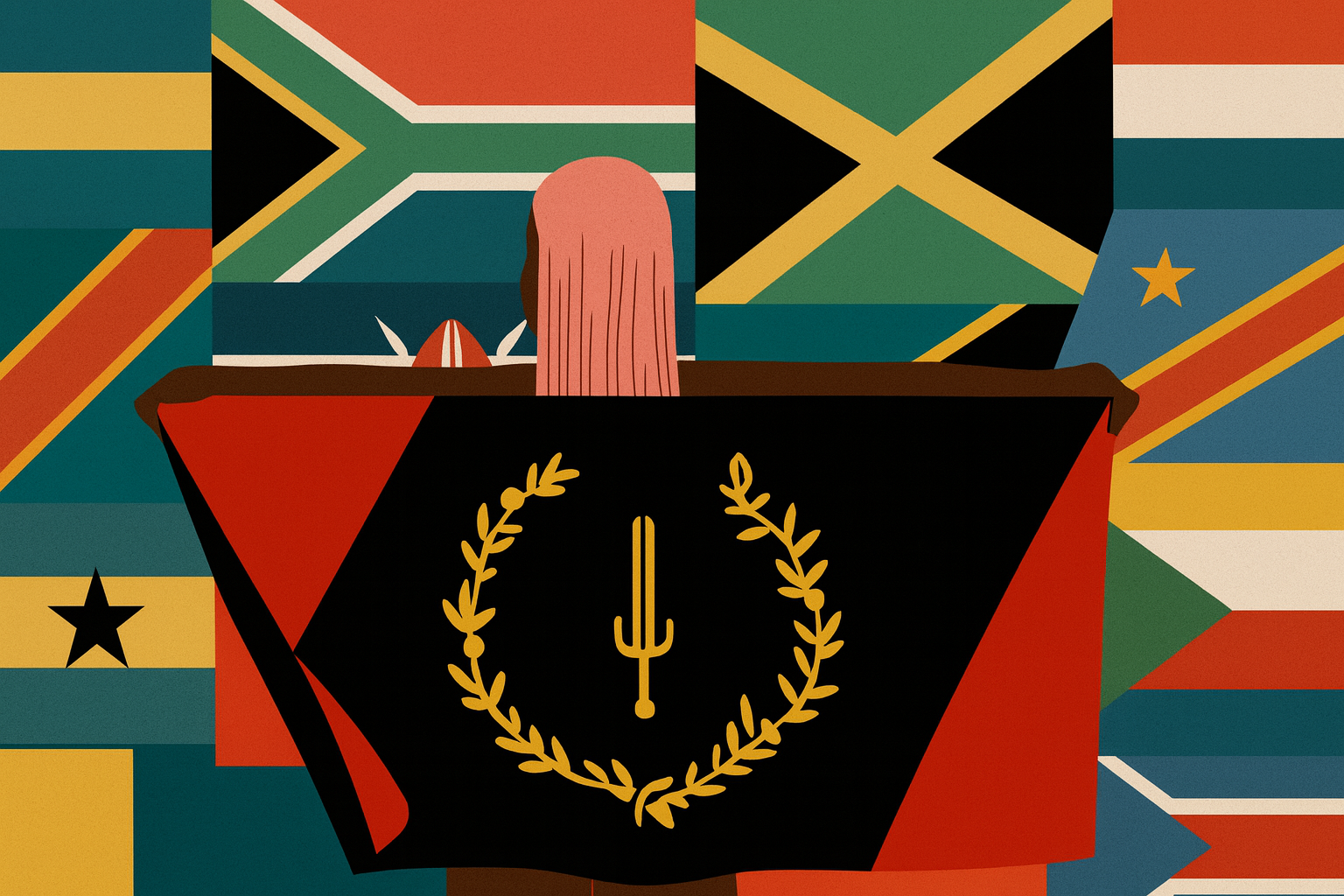
The line resonated with a new generation of Freedmen reclaiming their story with pride. In the music video, Monaleo flaunts the Black American Heritage Flag — the red, black, and gold banner created in 1967 by Melvin Charles and Gleason Brooks to symbolize Black American resilience and rebirth.
It was, on the surface, a cultural victory lap. TikTok was flooded with young Black Americans dancing to the track, calling themselves “Soulaans” with joy and defiance. “Support Black or get tf out the way!” she posted on Instagram — and for a brief moment, it seemed the artist and her audience were perfectly aligned.
IV. The Backlash: Lineage vs. Pan-Africanism
Then came the fracture.
Within days, lineage-based activists — many identifying as Freedmen, ADOS, or FBA — began questioning whether Monaleo’s message matched her circle.
Their concern wasn’t her artistry; it was the ideology surrounding it.
For years, Black Americans descended from slavery have pushed for lineage-based reparations, insisting that justice must be tied to ancestry — not skin color. The fear is that Pan-African “big tent” rhetoric can dilute the claim, allowing non-Descendant immigrants to co-opt benefits intended for Black Americans.
As AR1870 has long warned: “When race replaces lineage, repair becomes charity — not justice.”
Critics accused Monaleo of “cloaking herself in Pan-Africanism” — of using Black American symbols while aligning with voices that reject lineage precision. They cited interviews and livestreams where she and her host characterized lineage movements as “xenophobic” or “divisive.” To those who built the Soulaan identity, such framing felt like betrayal disguised as unity.
V. Receipts and Reactions: Social Media Speaks
The debate ignited across platforms.
On X (Twitter), activist Tariq Nasheed tweeted that Monaleo’s Nigerian-American manager, Toby Oniyitan, had locked his account after users unearthed old posts containing anti-Black American slurs like “akata.”
“Monaleo’s manager had to lock his page down after everyone pulled up his anti-FBA tweets,” Nasheed wrote — a claim that quickly went viral within lineage circles.
Further screenshots connected Oniyitan to rapper Maxo Kream, whose decade-old tweets allegedly mocked Black Americans. Whether those posts reflect current beliefs or not, the discovery fueled suspicions that Monaleo’s camp might include people hostile to the community she claims to uplift.
On TikTok, creators debated whether Monaleo’s team was “Pan-African-washing” the Soulaan movement. On Facebook, Black American groups discussed the uneasy symbolism of an artist embracing the Black American Heritage Flag while standing beside those who allegedly dismiss its meaning.
The story became inescapable, commentary segments from YouTube to podcasts dissected her choices.
Phillip Scott’s African Diaspora News Channel summarized the mood:
“Monaleo went off on her fellow Soulaans for calling her out… and that only made it worse.”
VI. Monaleo Fires Back
Monaleo did not stay silent. She hit back on Instagram Live, defending her art and blasting what she called “fake woke” gatekeeping.
“You can be pro-Black, Pan-African, and Soulaan at the same time. It’s not up for debate,” she said in one clip.
Her words revealed a generational gap. For Monaleo and many of her peers, heritage and diaspora unity can coexist. But for lineage activists, that coexistence has never been symmetrical. Pan-Africanism, they argue, often flows one way, celebrating diaspora solidarity while denying accomplishments, and sidelining the specific debts owed to Black Americans.
The tone of Monaleo’s response — fiery, unfiltered — poured gasoline on an already-lit conversation. Screenshots of her profanity-laced comments (“Go f*** yourselves”) ricocheted across X, alienating many who once championed her as a voice of the movement.
VII. The Larger Fault Line: Reparations and Representation
Why does this matter beyond music?
Because “Sexy Soulaan” landed in the middle of a political reckoning about who qualifies for reparations and representation.
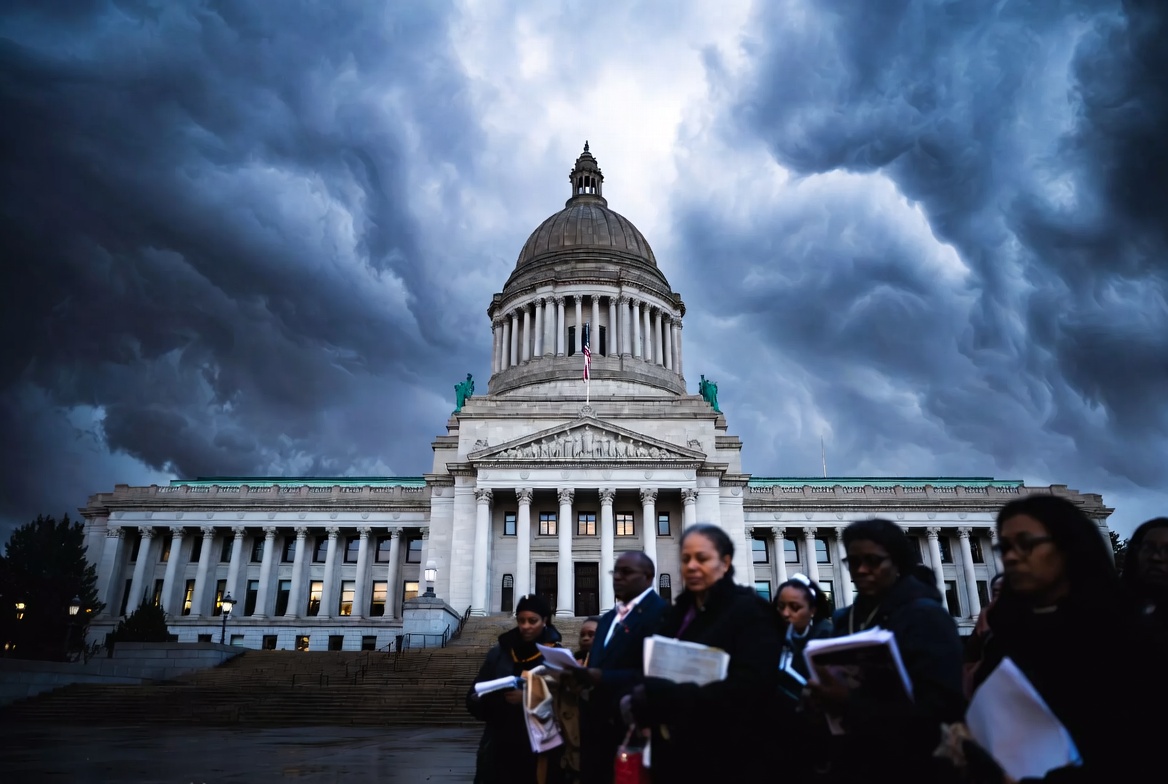
Across the country, task forces in California, New York, and Washington state are drawing lines between lineage and race.
Lineage-first groups like AR1870 argue that reparations must be exclusively for descendants of U.S. slavery, while Pan-African groups such as NAARC and N’COBRA push for broader inclusion.
That ideological tug-of-war has divided the movement itself — “a war inside Black America,” as AR1870 described it.
When Monaleo waved the Black American Heritage Flag, she wasn’t just repping a vibe — she was stepping onto a battlefield of meaning. Every lyric, every symbol now carries generational weight.
And that’s why the backlash feels bigger than a beef. It’s about who gets to speak for the lineage, not just from it.
VIII. Public Pressure and the Pattern of Accountability
This isn’t new. Public figures who brush up against lineage politics often find themselves forced to clarify, back down, or get canceled.
Fat Joe learned that lesson the hard way. His transgression against Black Americans came when he claimed that Latinos co-created Hip Hop, a statement that many saw as erasing the foundational role of Black Americans who birthed the culture from the Bronx to the broader world. The backlash was swift: online campaigns, boycotts, even the creation of the video “Microphone check” and widespread shunning within the Black American community reminded everyone that cultural ownership is not up for casual revision.
The episode revealed a clear truth: in the age of lineage consciousness, cultural accountability is non-negotiable.
Artists and influencers who invoke Black American symbols, stories, or heritage must also respect the history that made them possible. Borrowing Freedmen culture without honoring its roots no longer passes unnoticed.
IX. Between Anthem and Aftershock
Monaleo began this moment on fire. Sexy Soulaan captured the pride, defiance, and sacredness of being a descendant — a Soulaan. But her follow-up words sparked a different kind of conversation, one about authenticity and ownership.
Her long-term popularity, and perhaps her legacy, will depend on how she navigates these waters.
The same community that lifted her up will be the one that decides whether she stays aloft or sinks.
Monaleo’s song still bangs — but in a movement defined by precision and purpose, swagger alone won’t suffice. As the echoes of her outburst continue to reverberate, one truth remains: in this era, the descendants are watching.
About AR1870
American Renewal 1870 (AR1870) defends the interests of Descendants of U.S. Chattel Slavery through education, advocacy, and watchdog work.
From shaping Washington State’s historic lineage-based reparations study to producing powerful media and community forums, we guard the promise of reparative justice.
Guarding the Promise of Reparative Justice