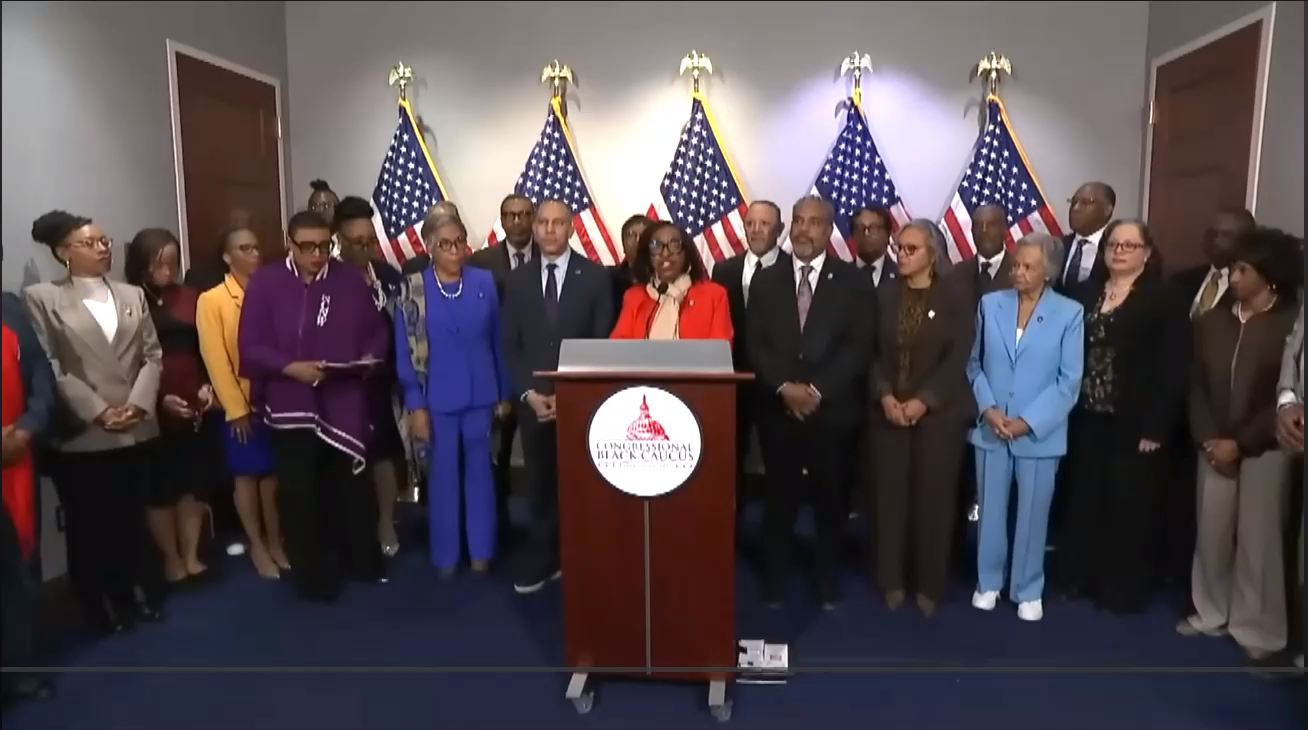
Sacramento, October 2025. In a move the reparations community sees as deeply contradictory, California Governor Gavin Newsom has vetoed multiple bills offering direct, material relief to descendants of enslaved persons, while simultaneously signing a measure to create a Bureau for Descendants of American Slavery. The contrast reveals a troubling disjunction: the state establishes a mechanism, yet rejects the very programs that could give it meaning.
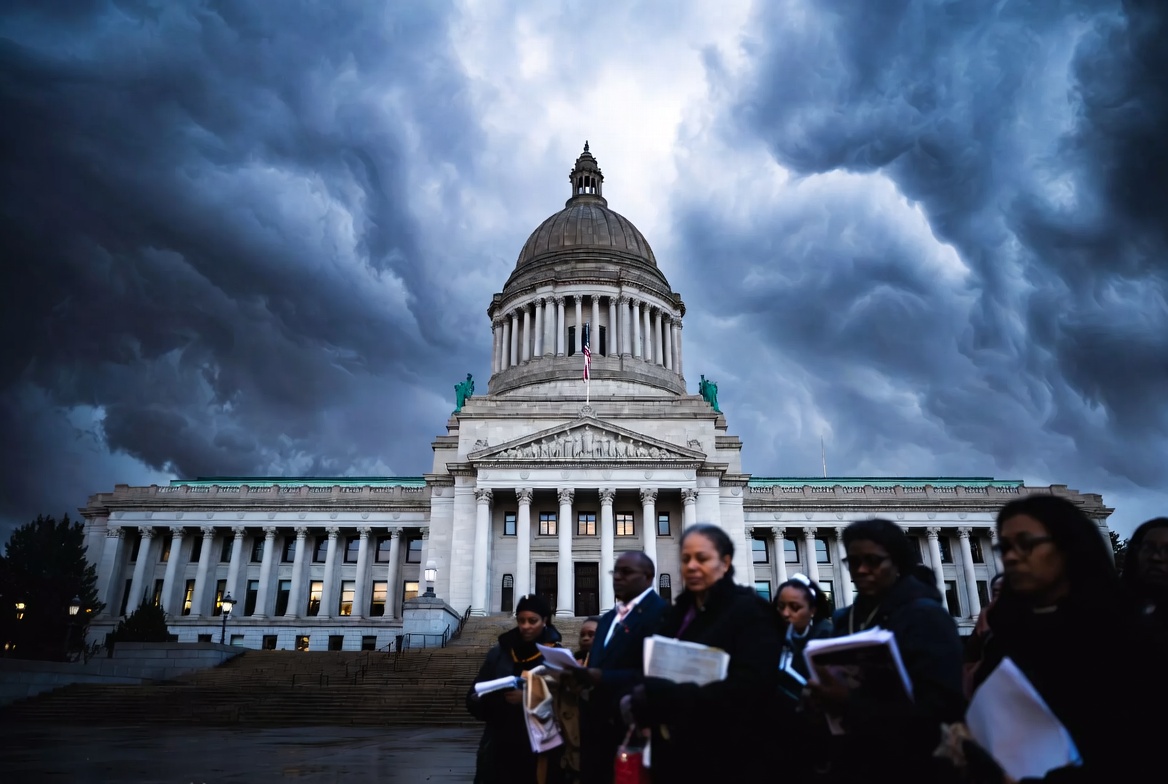
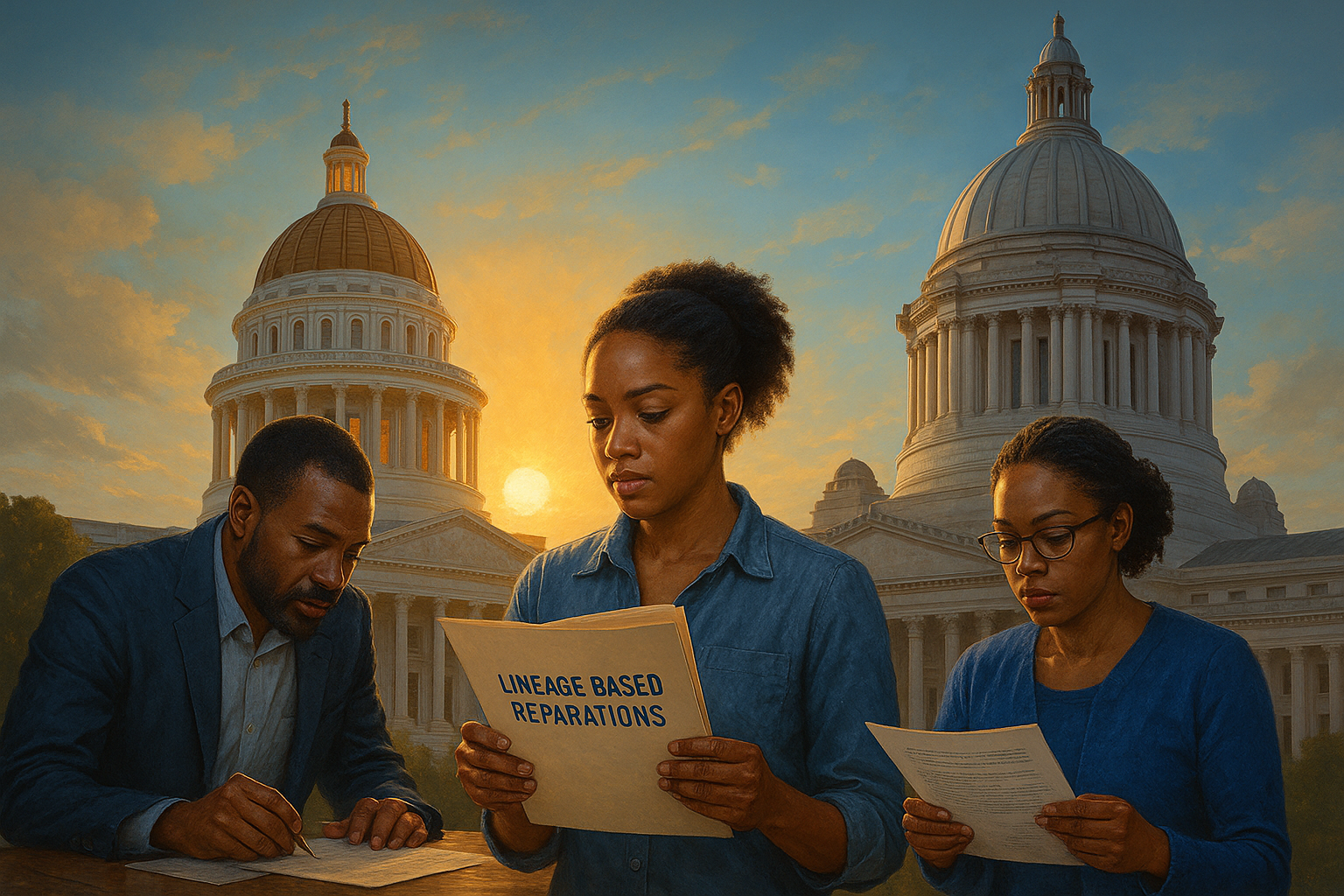
For advocates in Washington State, where a lineage-based reparations study is already underway, California’s misstep offers both warning and opportunity. Washington must commit not only to study—but to deliver justice in tangible form, lest its promise be hollow.
What Newsom Vetoed — The Bills of Substance
Governor Newsom declined to sign the following key bills, each of which would have delivered measurable benefits to descendants of enslaved people:
- AB 7: This bill would have allowed (but not required) public and private colleges to grant admissions preference to applicants who are descendants of U.S. slavery. Newsom labeled it “unnecessary,” asserting that universities already possess discretion over admissions. Politico
- AB 57 (or associated homebuying assistance): This bill would have set aside 10 % of funds in a first-time homebuyer assistance program specifically for descendants of enslaved persons. It was vetoed over concerns that an “ancestry-based set-aside” could incur legal risk. AP News
- SB 1050: A bill designed to allow families whose property was taken by racially motivated eminent domain to claim restitution, compensation, or return of property. Newsom vetoed it, citing that the state lacked an existing agency capable of implementing its provisions. AP News
In short: admissions preference, home-assistance set-asides, and property restitution—these were bills meant to do actual repair. They died under the governor’s pen. Meanwhile, Newsom signed SB 518 (creating the Bureau) and a companion measure funding genealogical verification through the California State University system. AP News
Thus the paradox: the bureau exists, but its tools of restoration do not.
The Meaningless Bureau Without Means
By sanctioning the bureau without backing meaningful programs, Newsom has institutionalized research over restoration. The bureau may collect genealogical data, certify lineage, and plan—but it cannot itself compensate, allocate property, or guarantee admission. Without enabling legislation, it is little more than a promise in waiting.
This move is especially perilous for Newsom’s political ambitions. Should he run for president, critics will point to these vetoes to charge that he speaks of justice while withholding it. A national base expecting substantive reforms may see this as evidence of cautious symbolicism rather than courageous leadership.
California’s approach risks becoming a cautionary tale: structures without substance, a bureaucracy built around hope, not restitution.
Washington State’s Moment: Deliver What California Denied
Washington State is in a distinct position. Under the lineage-based reparations study (envisioned in part by AR 1870), the groundwork is being laid before mass expectations. But the path forward must not replicate California’s half-measures.
Washington must insist on:
- Simultaneous enabling legislation, the study’s conclusion should automatically trigger bills for admissions preference, home-buying set-asides, business grants, property compensation, or cash.
- Lineage-verified preferences, like the California bills attempted, but tethered to the agency itself, ensuring constitutionally defensible implementation.
- A standing lineage reparations office with budget, not merely a task force or commission.
- Transparent accountability, annual public audits and a descendant oversight board.
- Immediate pilot payments or grants, small, symbolic disbursements to show good faith before larger claims processing begins.
If Washington acts in this way, it can redeem the Democratic promise in 2027 and beyond. In a nation weary of symbolic gestures, Washington can become the state that actually delivers reparatory justice.
Let California’s vetoes be our guidepost, not our pattern. The bureau without resources is hollow. Washington must not repeat the error. Build the structure and fill it with justice.
American Renewal 1870
Standing for Tangible Justice, Not Deferred Promises