Evanston, Illinois, made history as the first U.S. city to launch a reparations program. Grants of $25,000 were offered to Black residents who lived in the city between 1919–1969 or descended from someone who did. The purpose: to repair damage caused by housing segregation and zoning laws.
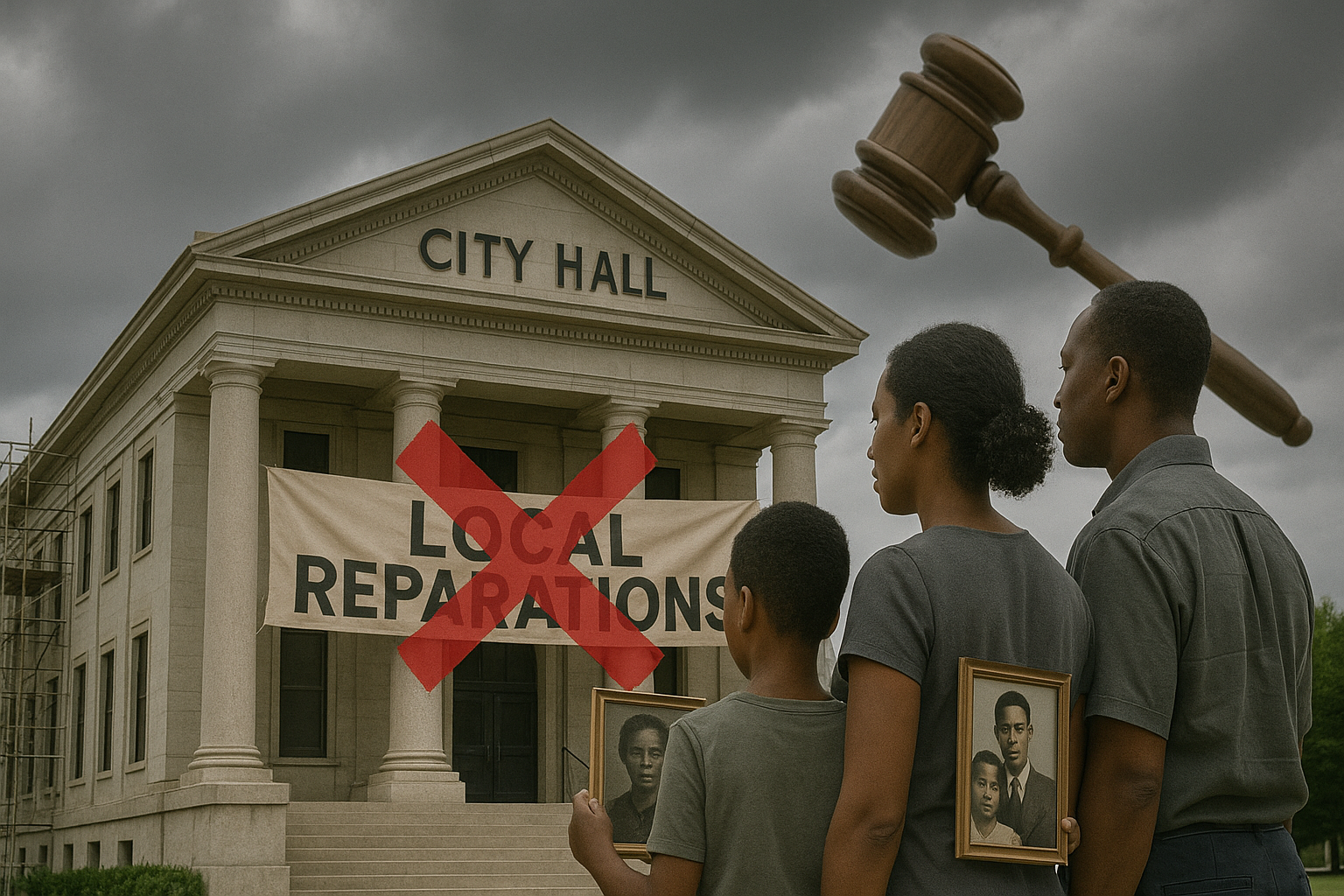
Now Evanston is being sued. Plaintiffs argue the program violates the Constitution’s Equal Protection Clause because eligibility is based on race rather than proof of specific harm. Courts have repeatedly demanded “narrow tailoring” when race is used. That means programs like Evanston’s are legally vulnerable.
Here’s the warning: if other task forces copy this race-based formula, they will also get sued—and likely lose. That will waste scarce resources, delay justice, and demoralize the very community reparations are meant to repair.
The lesson is clear: local reparations must be designed with airtight legal grounding. That means tightly linking eligibility to proven harms, centering descendants of U.S. slavery and discrimination, and building programs that can withstand judicial scrutiny. History will not forgive unforced errors.