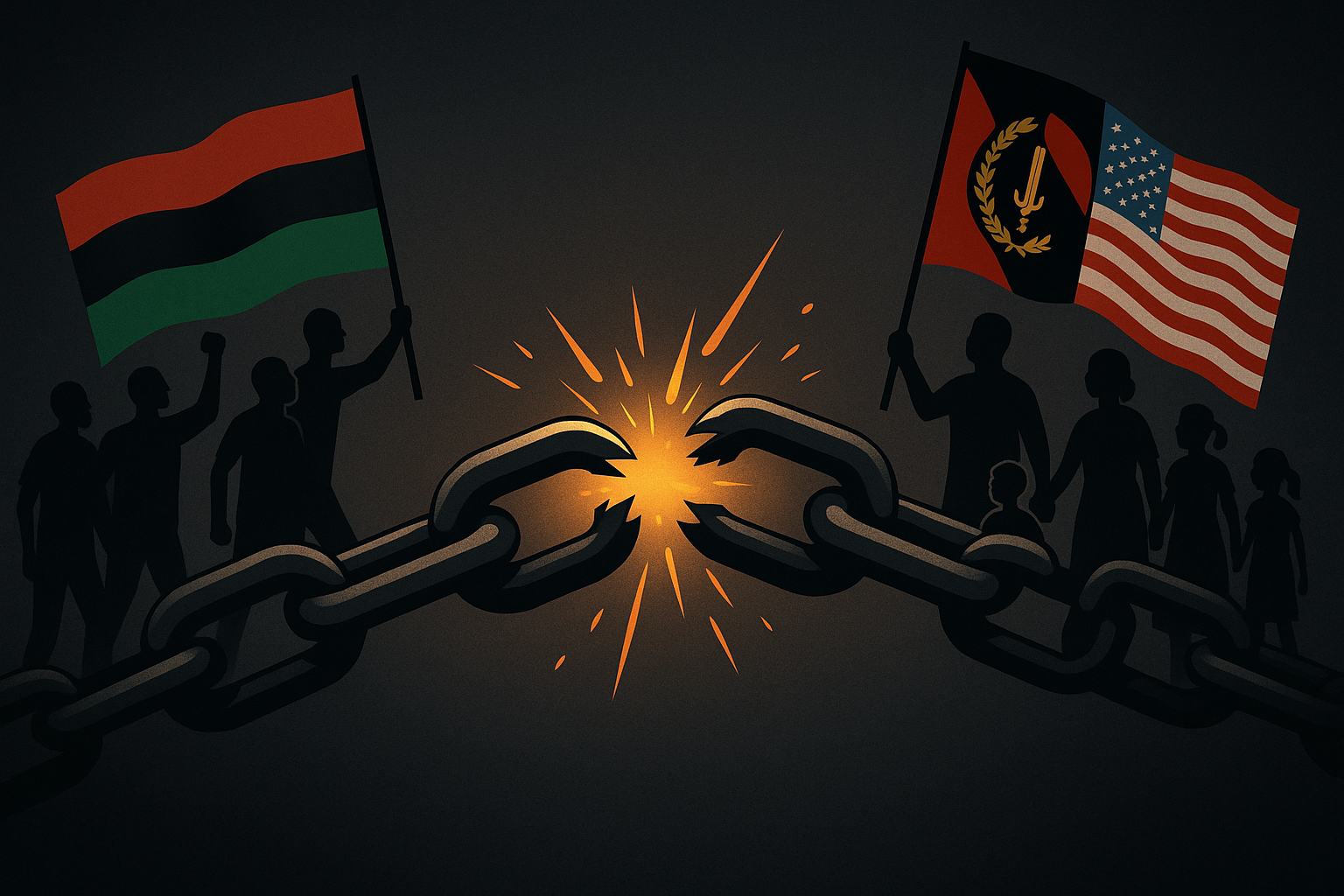
AR1870 exists for one reason: to defend the interests of Descendants of U.S. Chattel Slavery. And we are clear-eyed about what our community’s number one interest is today: reparations. We carried that conviction into Washington State, where our work led directly to the passage of the Charles Mitchell & George Washington Bush Reparative Study proviso —the only current, lineage-based reparations study now written into law. That victory shows what’s possible when reparations are built on lineage and history. But it also sets the stage for a warning: race-based frameworks popping up in cities and states across the country will collapse in court, wasting energy, resources, and trust, and threatening to sabotage the reparations movement itself.
The Cost of Ignoring the Law
If you design reparations around race, you are designing for defeat. Since the Supreme Court’s 2023 Students for Fair Admissions decisions ended race-based college admissions, courts and enforcement agencies have only hardened against government programs that allocate benefits by race. The U.S. Department of Justice’s September 4, 2025 warning to Asheville/Buncombe County made it plain: implement race-based reparations, and you risk violating federal civil-rights law — including Title VI, Title VII, the Fair Housing Act, and the Equal Protection Clause. That’s not a close call; that’s a flashing red light.
Meanwhile, a smarter path sits right in front of us: lineage-based, harm-tied eligibility — narrowly tailored to descendants of U.S. chattel slavery or other specific, documented government wrongs (e.g., Tulsa’s massacre survivors/descendants or Palm Springs’ Section 14 families). Treat lineage as race-neutral classification anchored in history and evidence, not skin color. If you want reparations that actually survive, build around lineage and documented harms.
Lineage Works Better — Legally and Morally
A lineage-based framework says: this remedy goes to people whose ancestors were legally enslaved in the United States, or to families the government directly harmed (e.g., forced displacement, targeted destruction). That is a direct remedial link, not a generalized benefit to a racial category. It honors specificity, documents causation, and narrows eligibility to those with the recognized claim at law. If you’re serious about winning, this is the path.
Diaspora Friction Is Real — and Must Be Stopped
One of the most dangerous accelerants of backlash in U.S. reparations work today is diaspora interference. In task forces across the country, some African and Caribbean participants are pressing for race-based eligibility that sweeps in all people of the same skin color in America. At the very same time, their own national and regional bodies — the CARICOM Reparations Commission and the African Union’s Committee of Experts on Reparations — are crafting reparations frameworks that serve only their citizens and diasporas. Black Americans are excluded from those claims.
But it is not only outside voices. Within our own ranks, some Black American pan-African ideologues are pushing to fold the wider diaspora into U.S. reparations claims, with little or no regard for how this undercuts their own people’s interests. Instead of defending the lineage-based claim unique to Descendants of U.S. Chattel Slavery, they champion a broad skin-color frame that dilutes the very foundation of our case.
This double-dealing is more than hypocrisy — it is sabotage. When diaspora advocates, joined by pan-Africanists inside our community, demand race-based eligibility, they dilute and displace the Black American lineage claim while preserving homeland-specific claims that lock Black Americans out. The result is predictable: growing resentment among Black Americans who see their fight for reparations being hijacked and weakened from within.
Let’s be clear: unless these undermining actions are stopped, the friction will intensify, and the strongest reparations claim in this nation — lineage-based justice for the Descendants of U.S. Chattel Slavery — will be put at risk. Race-based eligibility is not solidarity; it is a wedge that divides us and hands opponents the very arguments they need to strike reparations down in court.
Where Reparations Stand — and Who’s at Risk
| Jurisdiction | Status | Eligibility Frame | Threat (per DOJ/SFFA logic) |
|---|---|---|---|
| California (State) | Active (final report) | Lineage (descendants of US slavery / pre-1900 free Black) | Lower (if treated as lineage≠race) |
| Washington State (Study) | Exploratory | Lineage focus (US chattel slavery descendants) | Lower–Moderate (depends on design) |
| Illinois (State) | Active | Lineage language but often framed as African-American | Moderate (higher if framed by race) |
| New York (State) | Active | Race (“people of African descent”) | High |
| New Jersey (State) | Proposed / NGO report done | Race (all Black residents) | High |
| District of Columbia | Proposed | Mixed: Lineage + Race (“Black Washingtonians…”) | Mixed (lineage prong safer) |
| Evanston, IL (City) | Implementing | Mixed: Lineage/Harm + Race framing | Presently being “SUED” |
| Asheville/Buncombe, NC | Active (recs delivered) | Race-based community investments | High (explicit DOJ warning) |
| Detroit, MI (City) | Active | Race-based (Black Detroiters) | High |
| San Francisco, CA (City) | Exploratory | Race-based with local harm | High |
| Los Angeles (City/County) | Active | Race-based | High |
| Palm Springs, CA (Section 14) | Active | Lineage/place-based (displaced families) | Low |
| Tulsa, OK (Massacre) | Active | Event/lineage-based (survivors/descendants) | Low |
| Boston/Cambridge/Northampton, MA | Active | Race-based | High |
| Providence, RI | Active | Race-forward community programs | Moderate–High (Title VI risk) |
| Philadelphia, PA | Active | Race-based | High |
| St. Louis, MO / St. Paul, MN / Burlington, VT / Wilmington, DE / Greenbelt, MD / Chicago, IL | Active/Exploratory | Predominantly Race-based | High |
What to Do — Right Now
- Pivot eligibility to lineage/harm in every task force still drafting recommendations. Write it down. Vote it in.
- Document the causal chain (statutes, policies, takings, exclusion, wealth extraction) and pair remedies to those harms.
- Design race-neutral implementation levers: ancestry documentation, event-based classes (e.g., named displacement), geographic and time-bound harms, and administrable proof standards.
- Stop promising race-wide cash you can’t legally deliver. Shift to defensible benefits targeted to the legally recognized class.
- Align diaspora allies by respecting each claim’s proper venue: CARICOM/AU for their peoples; lineage-based U.S. programs for Descendants of U.S. Chattel Slavery.
Just as the civil rights movement had heroes who advanced freedom and villains who tried to block it, the reparative justice movement of our time will write its own roll call. History will not forgive unforced errors. If you care about delivering real reparations — not empty promises — then step forward as a builder of programs that can endure.
Call to Action
- Jurisdictions: Brief your task force on lineage-based, harm-tied eligibility and legal design.
- Community Leaders: Help shift your city/state off race-only frameworks before the lawsuits arrive.
- Volunteers/Donors: Join AR1870’s watchdog work to track the study, advisory boards, and implementation guardrails statewide.
AR1870
(This article reflects AR1870’s commitment to educate, advocate, and watchdog for Descendants of U.S. Chattel Slavery. Share it widely, brief your commissioners, and let’s fix the designs before they fail.)